Remember when we thought 2024 was hard? Cute.
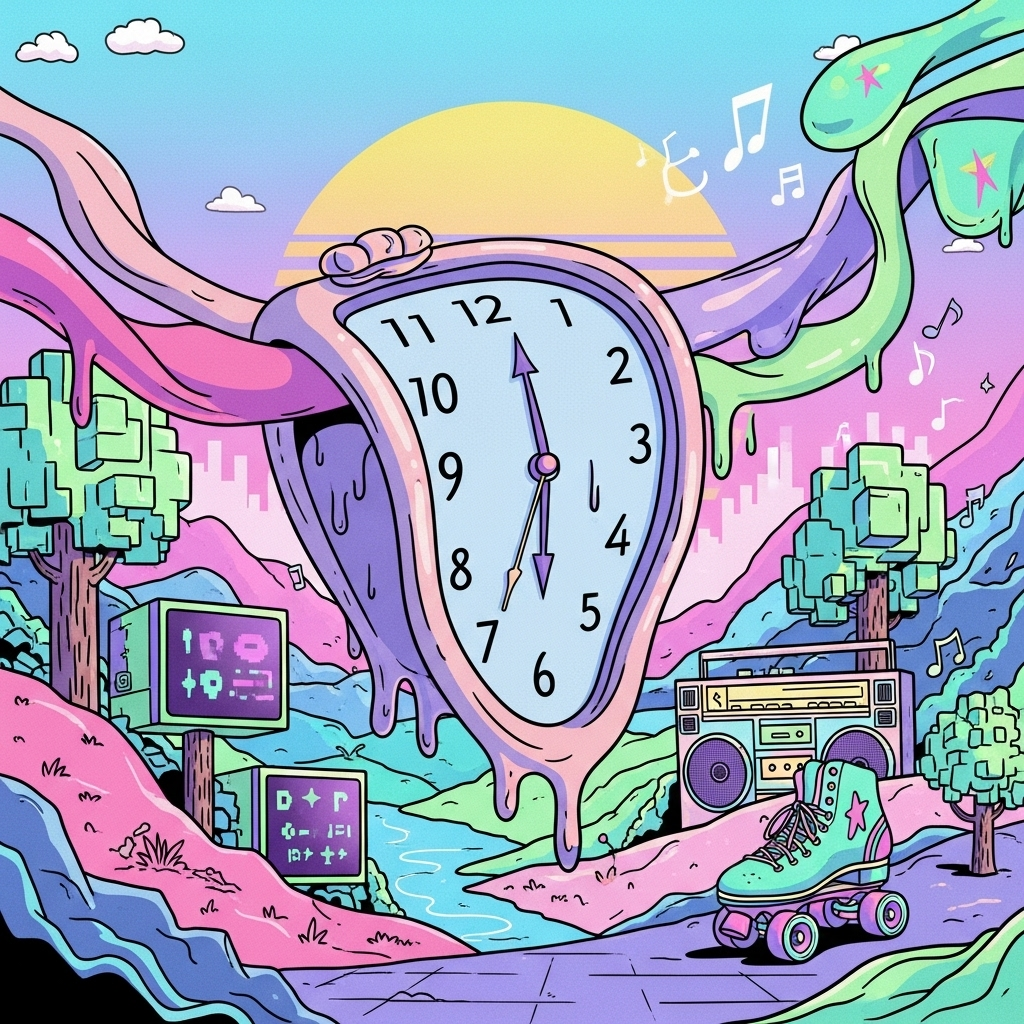
Everyone had a 5-year plan. 2025 had other ideas.
By February, USAID froze. Programs that had been running for years stopped overnight. Organizations that looked stable in December were closing doors by March. The sector is still reeling a year later. As we navigated the choppy waters of 2025, it became glaringly obvious how young people risk being left on their own when institutions retreat.
And that was just Q1. We made hard calls about what to protect and what to let go. The through-line was always the same: young people don't become less important because the funding landscape shifts. No clean way to package that in a 2025 reflection, but here's our take.
Not our first rodeo
When you've spent a decade building with young people across 19 countries, uncertainty isn't a crisis. It's Tuesday. 7 million youth later, we've learned that the work doesn't wait for stable conditions. And we were lucky to continue that work in 2025.
This included releasing the largest peer-reviewed study to date exploring the relationship between climate extremes and reproductive health, analyzing data from 820,000+ women. The takeaway? Climate change doesn’t just destroy infrastructure; it destroys choice. When flooding cancels a clinic visit, the margin for error for a young woman disappears.
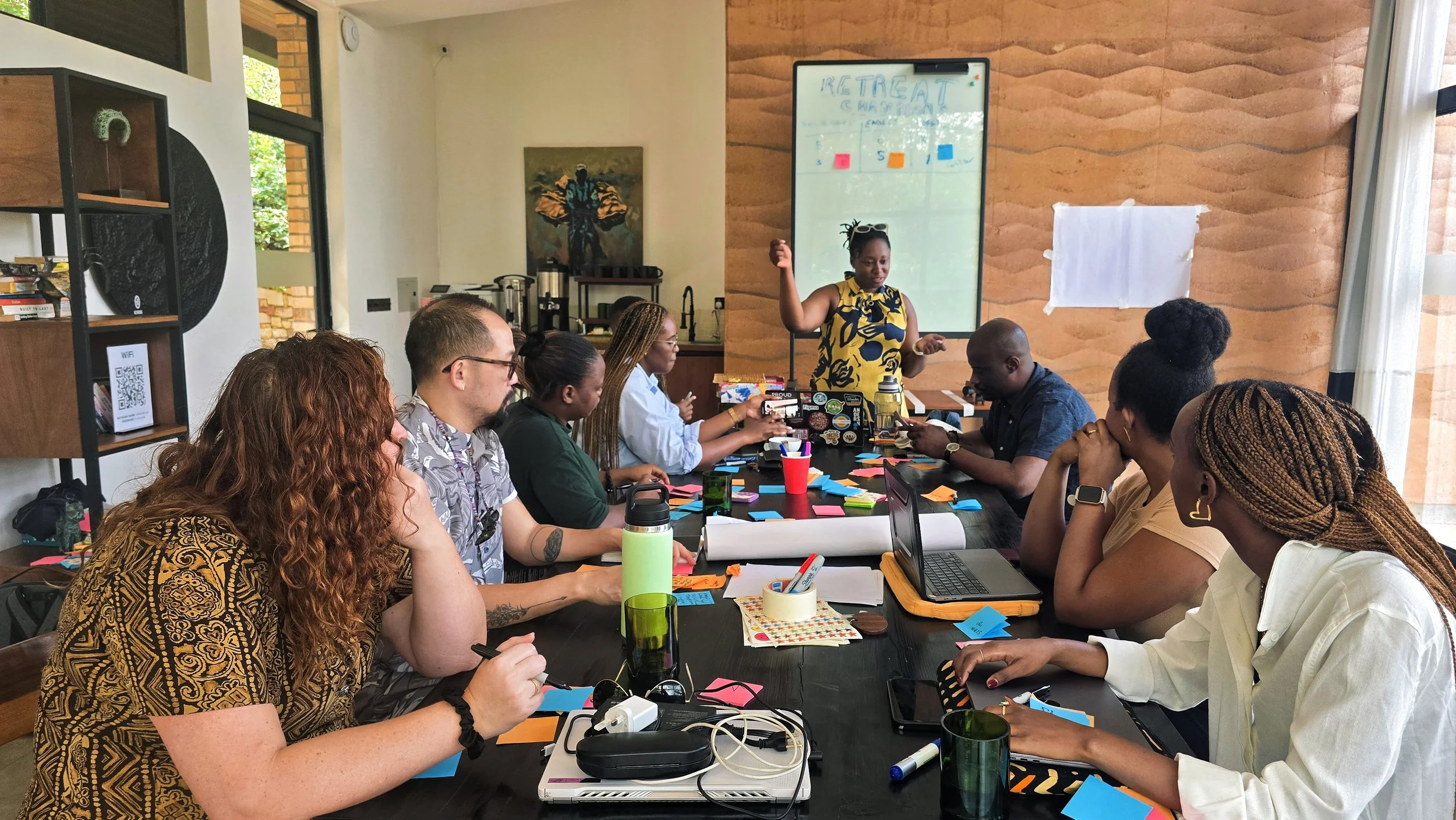
Over in Mozambique, we leaned into the uncomfortable work of measuring bias within health systems. Taking learnings from more than a decade of running sexual and reproductive health programs, we were operating in a new context, navigating language barriers and cultural dynamics that forced us to drop our assumptions at the door. Working with local partners, we trained 16 youth designers across four districts in Mozambique, testing SBCC prototypes with 150+ participants and refining client surveys with 545 respondents.
Our flagship product, CyberRwanda, proved that a "reproductive health app" has to be so much more. Because sexual health doesn't exist in a vacuum, we updated the platform to reflect that, including climate and mental health content. We ended the year with 91,351 young people reached through the platform, blowing past our target. That’s 90k+ youth with more agency than they had this time last year.
And some of our work this year happened behind the scenes. While we can’t always share every project (yet—we're cooking though), we’ve been working on one that leverages our expertise in youth-led design to roll out breakthrough program innovations across Africa. More on this soon, keep an eye out on our socials.
So, what now?
Is 2026 going to be our best year ever?
AI is reshaping everything from job markets to healthcare access. Climate shocks are rewriting the futures young people were promised. Health systems that were already failing youth are buckling under new pressures. Meanwhile, 1 in 5 young people globally are out of work.
How do we make sure AI amplifies youth agency and safety instead of exploiting them? What does climate-resilient healthcare actually look like for young women with zero margin for error? How do we rebuild systems that were never built for young people in the first place? And how do we do any of this when the people in power aren't listening?
We’re not pretending to have all the answers, but we know who does.
Our team of scrappy nerds is still here, still building, still making sure real power shifts to young people. Based on 2025, the adults could use the help.
Ready to partner with us to help youth lead the way? Reach out to our team today!